You turn the key. The starter spins. Battery’s strong. Engine rotates clean. But no fire—nothing. Not a cough, not a sputter. Just crank. I’ve seen this more times than I can count, and while fuel and spark come to mind first, don’t ignore the real culprit hiding in plain sight: the CAN bus. On anything past 2005, that digital nervous system runs the show. If it’s down, the engine won’t start—doesn’t matter how good the coils or injectors look.
First: Read the Signs Before You Touch a Tool
If your scan tool won’t talk to the ECM, don’t assume the computer’s dead. That’s what rookies do. Start with the cluster. Are you seeing a mess of lights—ABS, airbag, EPS, traction control, check engine—all lit at once? That’s not random. That’s the whole network screaming it’s offline. I’ve had techs pull the ECM out thinking it was fried, when the real issue was a chewed wire under the driver’s seat.
And check the codes. If you’re seeing U-codes—especially U0100: Lost Communication with ECM or U0073: Communication Bus A Off—you’re not dealing with a sensor or fuel pump. You’ve got a network blackout. The ECM never got the “go ahead” signal from the BCM or immobilizer. So it won’t fire injectors or trigger spark. Doesn’t matter how many times you crank it.
Rule Out the Fakes Before You Blame the Bus
Not every communication failure is a wiring issue. I’ve wasted hours chasing ghosts because I skipped the basics. A blown fuse, dead ground, or fried OBD-II port can look exactly like a CAN fault. So here’s how I triage it—fast.
| Symptom | Likely CAN Fault | Mimics That Fool You | How I Confirm It |
|---|---|---|---|
| No ECM comms on scan tool | Open/short in CAN wiring between OBD-II port and first node | Blown ECM fuse, bad OBD-II port, dead ECM power/ground |
Backprobe pins 6 (CAN High) and 14 (CAN Low) at OBD-II port with ignition ON. You should see ~2.5–2.7V on High, ~2.3–2.5V on Low. If both are 0V or equal, you’ve got a short or open. Also—check ECM power and ground. Always. |
| Other modules show “Lost Comm with ECM” | Physical break or short on ECM’s CAN segment, or a bad module dragging the bus low | Failed ECM, bad ECM ground, power supply issue |
Do a module pull test. With scan tool monitoring, disconnect non-critical modules one at a time—door modules, radio, etc. If the ECM suddenly comes online after pulling one, that module’s shorting the bus. Seen it on a 2016 Silverado where the rear seat module got wet and killed the whole network. |
| Engine cranks, immobilizer light stays on | CAN fault between BCM/immobilizer and ECM—no handshake | Bad key, broken antenna ring, BCM glitch |
Use a capable scan tool to check immobilizer directly. If it sees the key but ECM says “No Auth,” the signal isn’t getting through. That’s a CAN issue—not a key problem. |
Where the CAN Bus Actually Fails—And Why
The CAN bus runs on a twisted pair—CAN High and CAN Low. It’s not just wire; it’s a balanced system. Break that balance, and the network collapses. I’ve seen it all: rodents chewing through harnesses under the dash (especially on Subarus and older VWs), wires chafed against sharp bracket edges near strut towers, and corroded connectors in footwells from clogged cabin drains.
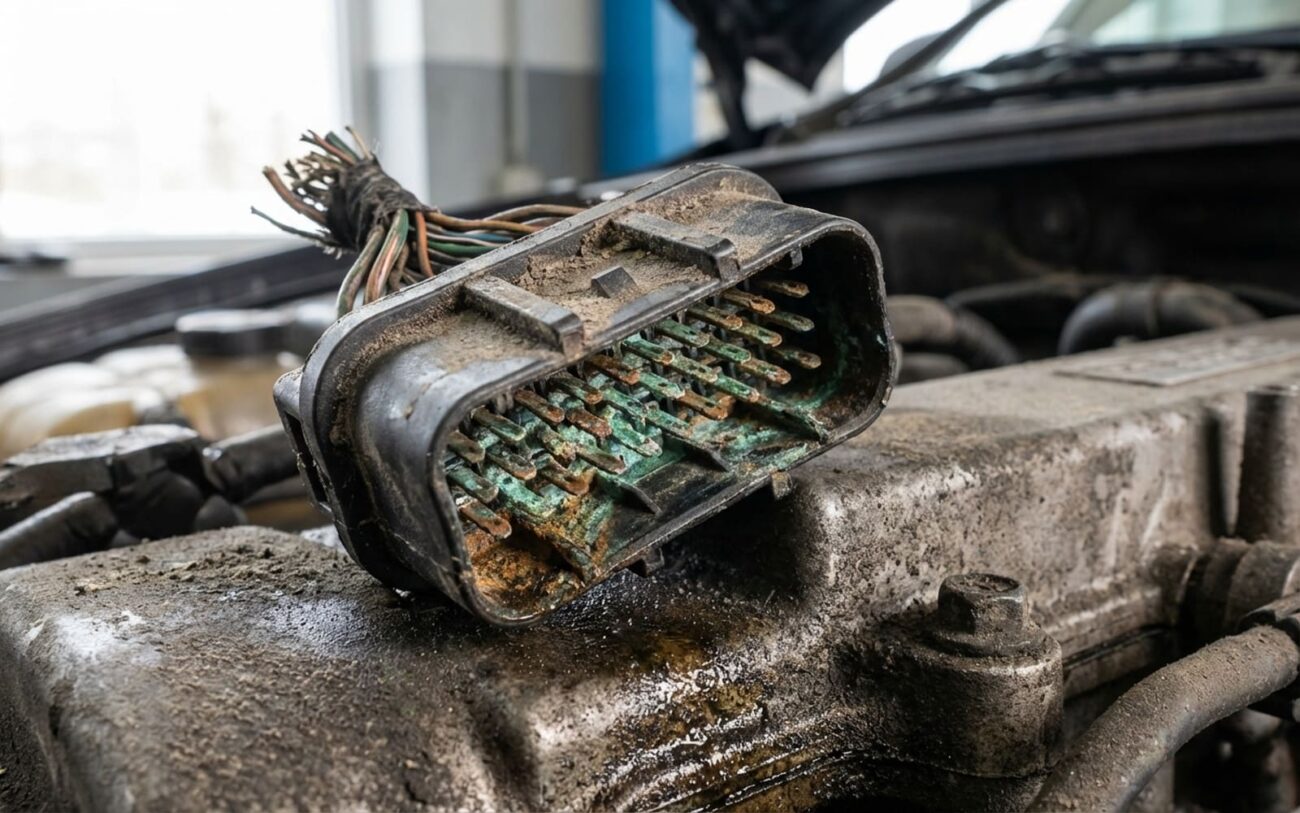
Moisture is a silent killer. Water gets into splice packs under the carpet—common on Fords and Toyotas—and slowly eats the termination resistors. Those are 120-ohm resistors at each end of the bus. If one’s corroded, the signal reflects back, causing “bus off” errors. I had a 2014 Camry come in with intermittent no-starts. Turned out the cowl drain was blocked. Water pooled under the passenger seat, right where the junction block lives. Took three weeks to kill it completely.
And don’t overlook bad repairs. I’ve seen DIY splices with solid core wire instead of twisted pair. That kills signal integrity. Or butt connectors crimped over insulation—high resistance, noise, intermittent faults. It works for a while, then fails at the worst time.
Here’s the truth:
A bad crank sensor won’t kill the whole network. It might set a code, but other modules still talk. True CAN failures knock out multiple systems. If your power windows, radio, and ABS all go dark at once, it’s not the sensor—it’s the bus.
How I Fix It—And What Actually Works
Visible harness damage PROFESSIONAL-ONLY
Hidden damage—under carpet, in main harness PROFESSIONAL-ONLY
Failed module (BCM, cluster, etc.) NON-REPAIRABLE → REPLACE MODULE
Did It Really Work? Here’s How I Know
Turning the key and hearing it start? That’s not verification. I’ve had engines fire up, then die 30 seconds later because the immobilizer never fully authenticated.
First, scan tool: all modules must show “connected,” zero active U-codes. Then, check live data. Can you command the BCM to lock the doors? Does the cluster respond? If not, the network’s still unstable.
Best tool? Oscilloscope. Look at CAN High and Low. You want clean, opposing square waves. No rounding, no noise, no collapse. If the signal’s messy, you’ve got a bad splice or impedance issue. I don’t trust a repair until I see that waveform.
And if it was immobilizer-related, the ECM must show “Security Access Granted” in live data. Then road test. No shutdowns, no warning lights. Only then is it done.
Cost, Reality, and When to Walk Away
| Repair Type | DIY Parts Cost | Shop Cost | Success Rate | Risks |
|---|---|---|---|---|
| CAN Wire Repair | $50 – $150 | $300 – $800 | 95% | Bad solder joints or lost twist cause noise and comebacks. |
| Module Replacement | $200 – $1500 | $500 – $2000+ | 98% | Wrong programming = dead module or cascading errors. |
| Full Harness Replacement | $500 – $3000 | $1500 – $5000+ | 99% | High labor risk. Often not worth it on older cars. |
Here’s what they don’t tell you: diagnosis takes 3–6 hours. That’s before you touch a wire. If the repair’s going to cost more than half the car’s value, it’s time to think. I’ve had customers part out a car instead of sinking $3K into a harness on a $4K vehicle. Harsh? Maybe. But I’d rather be honest than sell false hope.
Stop It From Coming Back
Prevention starts with awareness. Rodents? Use braided sleeving on harnesses under the hood. Moisture? Keep cabin drains clear—especially on Fords and Toyotas. I check them during every oil change on older models.
And use a scan tool regularly—not just when the light’s on. Do a full module scan. Look for pending U-codes or high CAN error counters. Those are early warnings. Fix a flaky connection now, save a no-start later.
Aftermarket stuff? Be careful. I’ve seen dash cams and trackers wired into shared grounds cause network noise. Use isolation relays. Never splice into data lines. And for critical connectors—apply dielectric grease. It’s cheap insurance.
To Prevent Recurrence
-
Inspect and clean cabin air intake drains every 12 months—especially if you park outside.
-
Use dielectric grease on CAN bus connectors in high-moisture areas (footwells, under seats).
-
Avoid aftermarket devices that tap into factory power or ground circuits without proper isolation.
