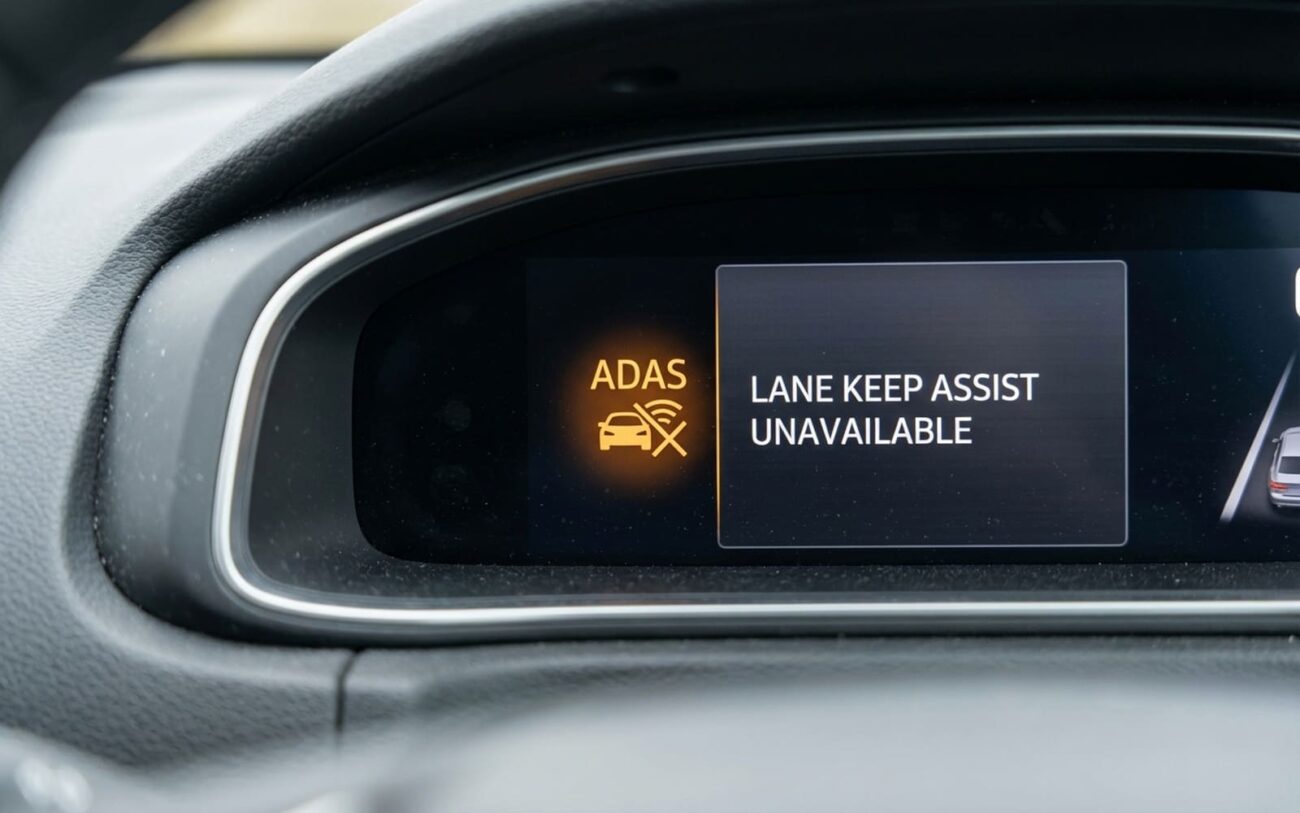
You had a remote start or alarm installed. Now your lane keep assist is dead. Pre-collision warning? Gone. Maybe the dash is lit up like a Christmas tree. I’ve seen this a hundred times—especially on late-model Toyotas, Fords, and GMs. And no, it’s not a “coincidence.” When ADAS systems fail right after an aftermarket install, the wiring job is almost always the culprit. Let’s cut through the noise and fix it right.
This Isn’t Random—It’s Electrical Surgery Gone Wrong
ADAS doesn’t run on magic. It runs on clean data from high-speed CAN networks. That radar in your grille? It talks over the Chassis CAN bus. The camera behind your windshield? Same thing. These systems expect precise voltage, stable ground, and uncorrupted signals. When a remote start installer taps into that network without a proper interface, they’re poking a hole in the nervous system of your car.
And it doesn’t take much. A single bad splice on a CAN-H or CAN-L line can introduce enough noise or resistance to make the front radar module drop offline. I’ve seen U0100 codes (lost communication with radar) traced back to a $2 t-tap crimped onto a factory data line. That’s not an install—that’s vandalism.
How I Diagnose This in the Bay
First thing I do? Ask: “Was the ADAS working before the install?” If they say yes, and it failed immediately after, we’re 90% sure where the problem is. But I don’t guess—I test.
Step one: Disconnect the entire aftermarket system. Unplug the module, pull the power and ground, disconnect any CAN taps. Don’t skip this—if you leave it partially connected, you’ll get false readings.
Clear all DTCs with a capable scan tool—something that can talk to ADAS modules, not just engine codes. On a Toyota, that means Techstream. On a GM, use GDS2. Generic OBD2 scanners? Worthless here.
Drive the car through a full cycle: start, drive 10 minutes, include lane changes and braking. Watch for fault returns. If the “Front Radar Unavailable” warning doesn’t come back, the aftermarket system is the source. Period.
What’s Actually Breaking the System?
From what I’ve seen over 25 years, four things go wrong—every time.
1. CAN Bus Splicing Without an Interface
On 2018+ F-150s and Silverados, I see this weekly. Installer cuts into the orange CAN wires behind the dash, throws on a t-tap, and calls it a day. Now the bus sees malformed messages or signal reflections. The ADAS module logs U3000 or U0140 codes and shuts down. You can’t “insulate” your way out of this—those splices have to come out.
2. Shared Power Circuits Overloaded
Say the installer taps into the same fused ignition circuit that powers the front radar. When the remote start engages, the sudden current draw drops voltage below 10.5V. Sensitive radar modules reset or brown out. I’ve measured this with a multimeter: 12.6V at rest, drops to 10.1V during crank. That’s all it takes.
3. Ground Loops from Poor Chassis Grounds
If the remote start module is grounded to a rusty bolt under the dash, and the radar module shares that ground path? Now you’ve got a ground loop. Even if the voltage looks fine, electrical noise rides on the signal. The radar doesn’t fail—it just “blinks out” intermittently. No DTC, no warning, just a dangerous gap in protection.
4. Physical Wire Damage During Routing
I’ve pulled apart A-pillars on Accords and Camrys where the installer jammed aftermarket wiring through the same grommet as the camera harness. Pinched a single twisted pair? That’s the entire ADAS network down. And since most of these are LVDS or Ethernet-based, you can’t just “splice and pray.”
How We Fix It (No Shortcuts)
For CAN bus issues: Remove every splice. I mean it—cut them out, solder in new factory-style connectors, heat shrink, and secure with proper clips. Then install a vehicle-specific interface module. iDatalink Maestro, PAC TRS, or OEM-grade equivalents. These plug into the OBD-II port or factory gateway and talk the car’s language. No splicing. No noise. This isn’t optional—it’s how it should’ve been done in the first place.
For power/ground issues: Find a dedicated ignition-switched circuit using a factory wiring diagram. Power the remote start through a relay, not a direct tap. Ground it to clean, bare metal—torque to 10 ft-lbs, seal it with dielectric grease. Never daisy-chain grounds. I’ve seen melted connectors from that.
For physical damage: Trace the entire aftermarket harness path. Look for pinched, stretched, or nicked factory wires. Repair with correct gauge wire (usually 0.5mm² or 20 AWG for data), solder, and heat shrink. If it’s a camera Ethernet line, consider replacing the whole harness—those aren’t forgiving.
Temporary diagnostic step: Disconnect everything aftermarket, clear codes, test drive. If ADAS works, you’ve confirmed the source. But don’t leave it disconnected—your car’s vulnerable without proper integration.
Validation: Don’t Guess, Test
Once repairs are done, I run a full validation. Not just “no lights on.” Real-world testing.
Clear DTCs. Cycle ignition five times. Drive at least 10 minutes—include highway, braking, lane changes. Verify every ADAS function: blind spot, cross-traffic, lane keep, AEB. Use a scan tool to monitor live data from the radar and camera modules. Look for communication stability, no message dropouts.
Then test the remote start: cold start, warm start, lock/unlock sync. It should work flawlessly—without knocking out a single safety system.
The Hard Truth About Cost and Risk
Let’s talk numbers. I’ve got three options I give customers:
| Repair Type | DIY Cost | Shop Cost | Success Rate | Secondary Risk if Failed |
|---|---|---|---|---|
| Professional Re-installation with Proper Interface Module | N/A | $400 – $800 | >95% | Continued ADAS malfunctions; potential for permanent network damage if improperly executed |
| DIY Correction of Power/Ground Only | $50 – $150 (relays, wire, connectors, tools) | $200 – $400 | Variable (<70% if underlying CAN issue exists) | Fire risk from poor connections; persistent ADAS faults; potential damage to control modules |
| Complete Removal of Aftermarket System | $0 (if doing it yourself) | $150 – $300 | 100% (restores OEM electrical integrity) | Loss of remote start and alarm functionality |
Here’s my advice: If the remote start doesn’t add $800 in value to your daily life, just remove it. I’ve told customers that flat out. Better to have full ADAS than a convenience feature that could get you killed.
How to Avoid This Next Time
Next install? Demand a plug-and-play interface. If the shop reaches for a wire stripper near the CAN bus, walk out. On modern cars, there’s no excuse for splicing.
And test before you leave. Cycle the ignition. Drive it. Turn on lane keep. If it hesitates or throws a warning, don’t accept it. I’ve caught bad installs five minutes after the customer pulled up—because I tested.
Last thing: ADAS is not a luxury. It’s a safety system. Treat it like your brakes. If a remote start compromises it, that install failed—no matter how well the engine starts.
