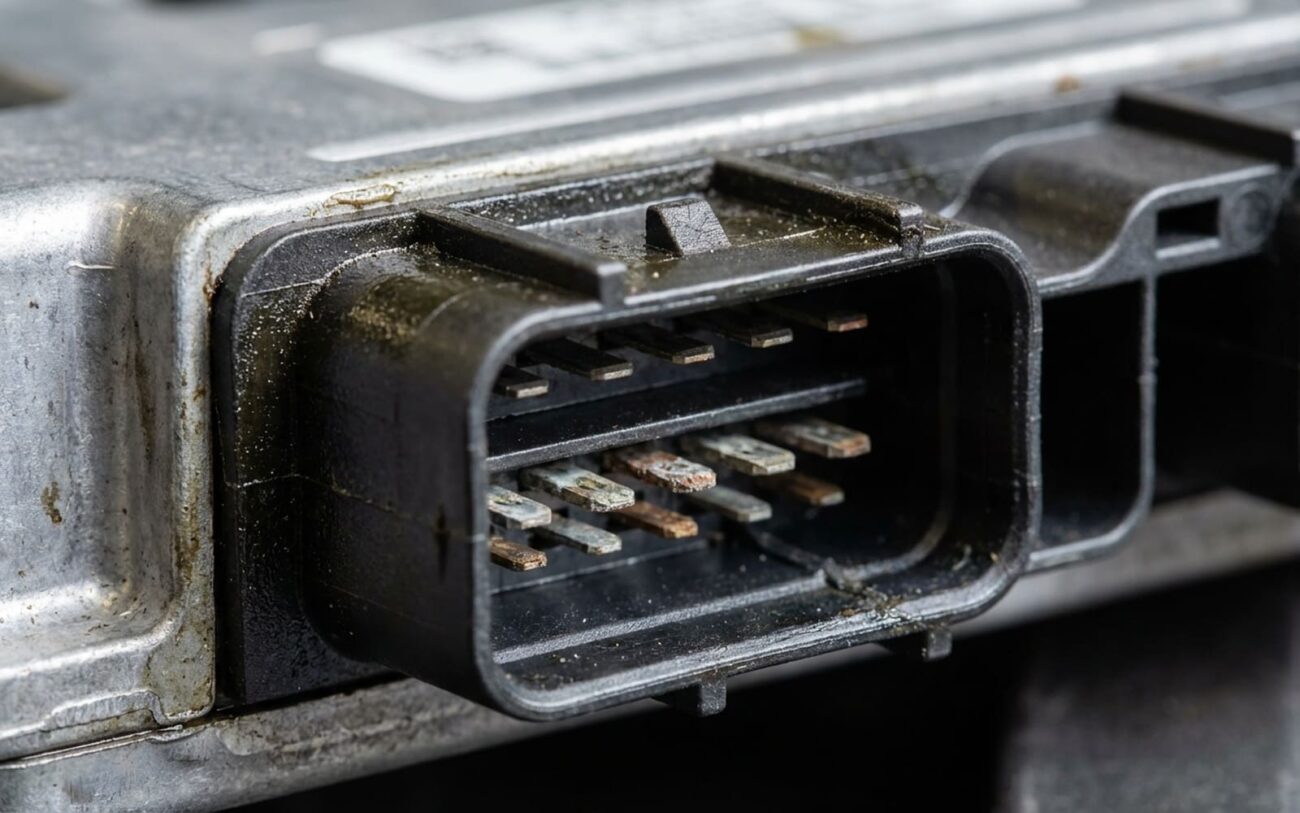
Why Your New Ford EcoBoost or VW TSI Engine Computer Needs VIN Programming
Alright, let’s talk about Engine Control Modules, or ECMs. I’ve been turning wrenches for over 25 years, and one of the most common head-scratchers I see, especially with modern Ford EcoBoost and VW TSI engines, is when someone installs a brand-new ECM – same part number, same connectors, looks identical – only for the car to refuse to start or die after a couple of seconds. They’re confused, right? “It should just work,” they say.
But here’s the deal: that new ECM is basically a blank slate. Think of it like a brand-new computer that just came out of the box with no operating system installed. It has all the hardware, but it doesn’t know what car it’s in, what engine it’s supposed to manage, or even if your key is authorized to start it. That’s where VIN programming comes in. This isn’t some optional step or a dealer upsell; it’s the process of giving that ECM its digital identity, its brain, if you will. Without it, the module can’t run the engine safely, legally, or at all. I’ve seen too many folks drop a grand or more on a replacement ECM only to learn the hard way that programming is a separate, absolutely required, and non-negotiable step.
What You’ll See: Symptoms of an Unprogrammed ECM
When an ECM isn’t properly programmed to your vehicle’s VIN, the symptoms are usually immediate and pretty specific, especially right after a replacement. You’re not looking for a slow decline here; this is a hard failure right out of the gate.
The Flashing Immobilizer Light & No-Start
The most common sign I see is a no-start condition, where the engine cranks strong, but won’t catch, and you’ll notice a flashing immobilizer or security light on the dash. That light is your first, best clue. It tells you the car’s anti-theft system (PATS on Ford, SKIM on VW) sees this new ECM as a stranger trying to get into a secure network. Your key might be perfectly valid, but the ECM hasn’t been introduced to the vehicle’s security ecosystem yet. Sure, a bad key transponder or a damaged antenna ring around the ignition can cause similar issues, but if this happens immediately after an ECM swap, programming is the prime suspect.
The “Start-Then-Stall” Trick
A slightly more deceptive symptom is when the engine actually starts, runs for a second or two – maybe three – and then just dies. It feels like it’s starving for fuel or has a massive vacuum leak. What’s actually happening is the immobilizer handshake partially passed, so the engine gets fuel and spark for a moment. But the ECM still lacks the VIN-specific calibration data – things like the precise fuel maps, ignition timing, cam phasing, and turbo control settings it needs to sustain operation. Without that critical data, it shuts down.
Diagnostic Trouble Codes (DTCs)
From a diagnostic standpoint, your scan tool is going to tell the real story. If the scanner can’t even communicate with the ECM, or you’re pulling codes like P0606 (Internal ECM Processor Fault) or P0630 (VIN Not Programmed or Mismatch), you’re almost certainly dealing with a blank or incorrectly programmed module. I’ve also run into cases where the ECM communicates somewhat but clearly shows a mismatched VIN – that’s a dead giveaway.
How I Confirm It: Isolating the ECM Programming Issue
Before you jump to programming, you’ve got to rule out other possibilities. A lot of systems can mimic ECM-related no-starts, so methodical testing, not guesswork, is key. Here’s my approach to separating a programming issue from look-alike problems:
-
If you have a no-start with a flashing immobilizer light:
This usually points to the ECM not being adapted to the vehicle’s immobilizer system. But it could be a faulty key transponder, a damaged immobilizer antenna around the ignition, a failed instrument cluster, or a wiring fault in the CAN network. To confirm, I use an OEM-level scan tool – like Ford IDS (Integrated Diagnostic Software) or VW ODIS (Offboard Diagnostic Information System). I’ll read the VIN stored in the ECM. If it’s blank, a default VIN, or doesn’t match the car’s physical VIN, then programming is definitely needed.
-
If the engine starts then stalls after 1-3 seconds:
This symptom suggests the ECM passed the initial immobilizer check but lacks the VIN-specific calibration data – the precise fuel maps, boost curves, and other parameters. Mimics here could be a severe vacuum leak, a failing fuel pump or its control module, an intermittent crankshaft position sensor, or even a cam timing issue. My definitive test? I’m looking for “Calibration Not Programmed” or “As-Built Data Missing” faults with the OEM scan tool. I’ll also compare the calibration ID in the ECM to the factory build sheet for that specific VIN.
-
If you’re seeing VIN mismatch or communication fault codes:
This is a pretty clear sign the ECM was programmed with the wrong VIN, or it’s adapted to a different vehicle’s configuration. External mimics can include a faulty gateway module (especially common in VW/Audi networks), damaged CAN bus wiring, or simple power/ground issues at the ECM. To be sure, I’ll read the VIN directly from the ECM memory and verify it matches the vehicle’s VIN exactly. A network topology test with the OEM tool can also quickly reveal if other modules are having trouble communicating with the ECM.
Why It’s Critical: The “Why” Behind VIN Programming
Let’s be absolutely clear: the need for VIN programming isn’t a failure in itself – it’s by design. This isn’t like a faulty sensor or a blown capacitor. It’s how modern engine management systems are built to ensure security and optimal performance. The root cause that triggers the need for programming is usually an actual ECM failure – maybe an internal processor fried, a power supply circuit went bad, or water got in and corrupted the flash memory. But once you replace that hardware, you’re not done. You’ve got to integrate it.
Two Core Reasons for This Programming:
- Security (Immobilizer): The ECM stores encrypted security codes (PATS for Ford, SKIM for VW) that must match the key and other modules like the instrument cluster. A brand-new module literally has no keys in its memory, so it won’t allow the engine to run.
- Configuration (As-Built Data): Your car’s VIN holds all its unique build specifications – engine type, transmission, emissions equipment, even specific options. Programming downloads the exact fuel maps, torque limits, turbocharger characteristics, and other critical data needed for your specific vehicle to run correctly and efficiently.
The Only Way To Fix It: Professional Programming Procedure
This is Professional Territory. Period.
Let me be blunt: this is NOT a DIY job for the average garage mechanic. You absolutely cannot do this with a cheap $50 OBD2 scanner. You need factory-level tools, a rock-solid stable power supply, and direct access to secure manufacturer programming servers. There are no shortcuts here.
Hardware & Software Requirements Professional Grade
Stable Power Supply Absolutely Critical
Executing the PMI Procedure
Don’t Call It Done Yet: Post-Repair Validation
Just because the engine fires up doesn’t mean the job’s 100% done. You need to confirm that the ECM is fully integrated, communicating correctly with all other modules, and operating within specifications. Here’s my checklist:
My Validation Checklist
-
Verify the engine starts immediately, idles smoothly, and shows no signs of stalling or surging.
-
Clear all Diagnostic Trouble Codes (DTCs) and ensure no immobilizer or VIN-related faults (like P0630, U0100) return after a few drive cycles.
-
Confirm the VIN displayed in the ECM’s memory (via scan tool) matches the vehicle’s physical VIN exactly.
-
Perform a network topology test to ensure all other modules (ABS, transmission, instrument cluster, etc.) are communicating properly with the new ECM.
-
Road test the vehicle under various conditions while monitoring live data for critical parameters like fuel trims, boost pressure, and cam timing. Everything should be within spec.
The Bottom Line: Cost, Risk, and Smart Decisions
This isn’t a cheap repair, and you need to understand exactly what you’re paying for – and whether it even makes financial sense for your vehicle. Here’s how I break it down:
| Repair Type | Typical Cost | Success Rate (Professional) | Secondary Risk if Failed |
|---|---|---|---|
| ECM Replacement & Programming | $1,000–$2,500+ (Part + Labor + Programming Fees) | >98% | A permanently “bricked” ECM (total loss of the new module), severe engine damage from incorrect calibration, or persistent emissions failures. |
I’ll be honest with you: DIY programming is just not practical for most people. The cost of the OEM tools and software subscriptions alone can easily exceed the cost of having a professional do the job. And the risk of bricking a $1,000+ module because of a voltage drop or a missed step is very real. For almost everyone, this is a professional repair, hands down.
My “40% Rule” for Major Repairs
If the total repair cost (parts and labor) for something like an ECM replacement and programming exceeds 40% of your car’s current market value, you really need to consider your alternatives. On an older Ford Focus or a high-mileage VW Golf, a $2,000 ECM repair might not make financial sense. Sometimes, the most economical choice is to walk away and put that money towards a different vehicle.
Prevention & Monitoring
You can’t really prevent an ECM from failing – they’re complex computers with finite lifespans, and sometimes they just give up. But you can certainly prevent making the repair worse, or bricking a new one.
The number one rule, which I’ve already emphasized, is this: never attempt programming without a healthy, stable power supply. Before you even think about plugging in a diagnostic tool, test the vehicle’s battery under load. Check the battery terminals for any corrosion and ensure they’re tight. During any programming procedure, a certified, dedicated battery maintainer must be connected. This isn’t just a recommendation; it’s non-negotiable insurance on a very expensive part.
As for early detection, ECM failures are often sudden and catastrophic. But sometimes there are subtle warning signs: intermittent no-crank conditions, multiple unrelated DTCs popping up across different modules, or the engine cutting out randomly at idle. These can point to internal processor or communication faults within the ECM. Using a higher-end scan tool to monitor network health and module communication can sometimes catch these issues early. But in most cases, when an ECM fails, it fails hard and fast.
