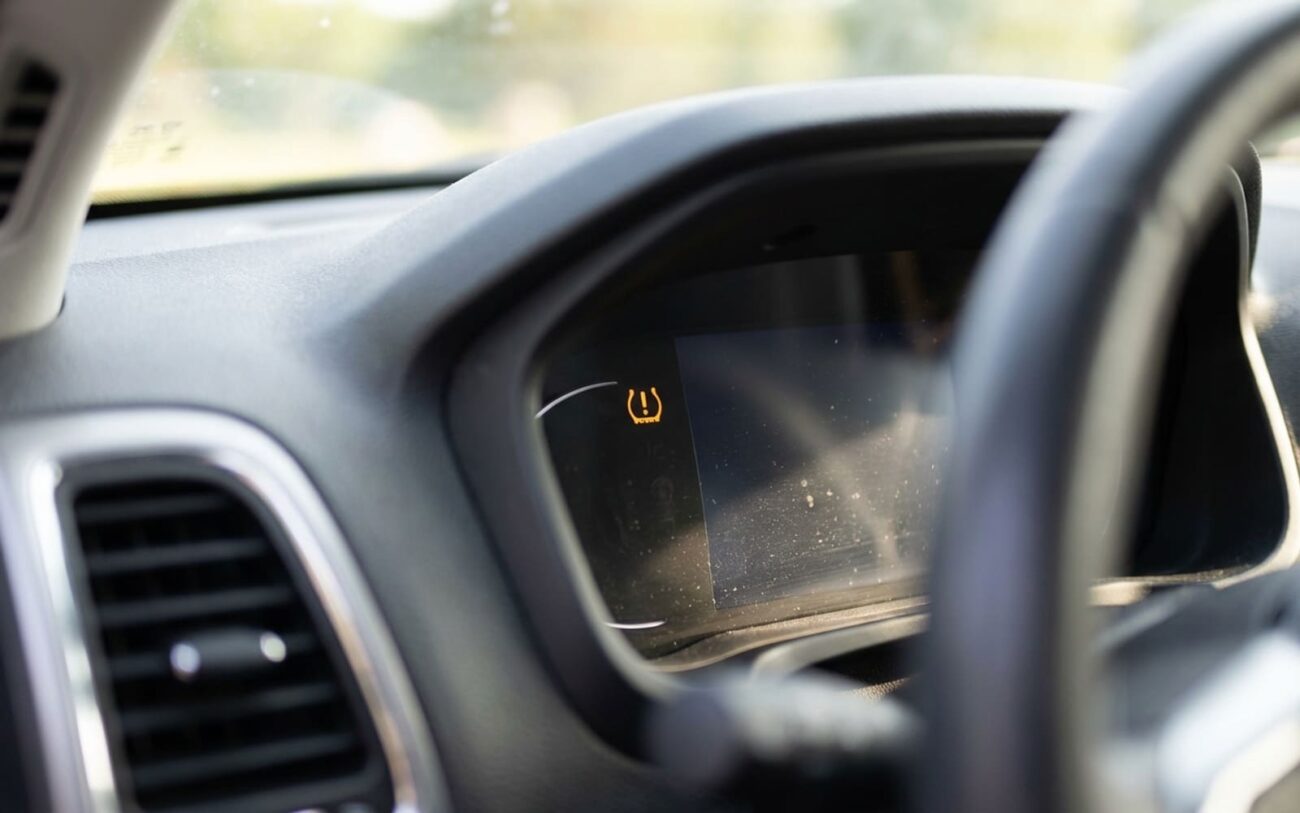
You just got new tires or had a rotation, and now the TPMS light won’t shut off—even though every tire is inflated to spec. I’ve seen this a thousand times. That little yellow symbol isn’t telling you your tires are low; it’s saying the system’s blind. It can’t talk to one or more sensors. And before you start throwing parts at it, let me walk you through how I diagnose this in my shop—step by step, no guesswork.
First: Read the Light’s Behavior
A steady TPMS light usually means one or more tires are underinflated—or the system lost communication with a sensor. But if the light flashes for 60–90 seconds after startup and then stays on? That’s different. That’s a stored DTC—typically U0121 or similar. The module knows it’s missing data.
I had a 2018 Silverado come in last week with that exact symptom. Owner thought it was a bad sensor. Turned out the shop didn’t perform a relearn after rotating the tires. A five-minute procedure fixed it. No parts, no charge.
Here’s what the flash means: the TPMS control module tried to poll each sensor during startup, got no response from one or more, and set a system fault. Now it’s in “limp mode”—no monitoring, no warnings. And that’s dangerous.
Real Talk:
Driving without functional TPMS is like driving with your eyes closed. A slow leak goes unnoticed, heat builds in the sidewall, and at highway speeds? Blowout. Tread separation. I’ve towed enough melted tires to know—this isn’t just a dashboard annoyance. It’s a NHTSA-mandated safety system for a reason.
Diagnose Before You Replace
Most TPMS issues aren’t failed sensors. They’re setup errors. I start with a scan tool that reads live TPMS data—not just OBD2 codes. You need to see what each sensor is reporting: pressure, temperature, battery status, and ID.
| Symptom | Likely Cause | Mimics | How I Confirm |
|---|---|---|---|
| Light on after tire work | Sensor damaged during mounting, valve core leak, or missing relearn | Underinflated spare with sensor, ECU not updated, indirect TPMS with mismatched tires |
Scan for live data. If pressure reads 0 psi or “No Signal” on a properly inflated tire, the sensor’s either dead or not registered. If pressure reads correct but light stays on? It’s a registration issue—common after rotation. |
| Flashing then solid | Module missing sensor IDs, RF interference, or total sensor failure | Aftermarket wheels blocking signal, TPMS module power fault, nearby electronics (e.g., dash cam, phone charger) |
Use a TPMS trigger tool. Walk around the car, wake each sensor. No response from one? Dead battery or physical damage. Then check module memory—if IDs are missing, it’s a relearn or module issue, not the sensor. |
| Light stays on, pressures correct | Dead sensor battery, internal circuit failure, failed relearn | Instrument cluster fault, CAN bus error, BCM glitch |
Do a relearn first. If that fails, monitor RF reception with a scope. No signal from a known-good sensor? That points to module, antenna, or wiring—not the sensor. |
What Actually Fails (And What Doesn’t)
TPMS sensors are sealed units—pressure transducer, RF chip, temp sensor, and a 10-year lithium battery. No serviceable parts. When they die, it’s usually one of three things:
-
Physical damage during tire mounting—especially on alloy wheels. I’ve seen techs rip sensors clean off with aggressive bead breakers. Always ask: “Do you use TPMS-safe tools?”
-
Corrosion at the valve base. Galvanic corrosion between aluminum stems and steel rims is brutal in winter climates. Salt + moisture = dead contacts. Nissan even issued a TSB about high-pressure washes forcing water past seals.
-
Battery depletion. Most sensors last 7–10 years. After that? Nothing. No signal. No comeback. On a 2014–2016 F-150, I see this weekly.
But—and this is important—not every TPMS light means a bad sensor. A slow leak at the bead or a faulty valve core will trigger the same warning. Check the obvious first. I’ve saved customers hundreds by replacing a $3 valve core instead of a $120 sensor.
How I Fix It (Based on What’s Broken)
Valve Core Leak? Fix It Yourself
Dead Sensor? Shop JobProfessional Only
Lost Sensor IDs? Relearn It (DIY or Pro)
Cloning? Last Resort Only
After the Fix: Don’t Skip Validation
Just because the light went out doesn’t mean it’s fixed. I drive the car, monitor live data, confirm all four sensors are reporting. And I check this:
Prevent It From Coming Back
-
Use shops that know TPMS-safe mounting. Padded tools, no direct valve contact. If they’re not mentioning it, they’re not doing it.
-
Rubber valve caps only. Metal caps look clean but cause galvanic corrosion and can weld themselves to the stem.
-
Monthly visual check. Is the stem straight? Any cracks? A bent stem won’t last.
-
If the light stays on longer than normal at startup, or flickers intermittently, that’s a weak battery. It’s dying.
Cost vs. Risk: When to Walk Away
Here’s the real talk no one wants to hear: replacing all four sensors on a 12-year-old Corolla might not be worth it. Let’s break it down:
Valve Core Replacement
High success rate, low risk. Continued underinflation if failed.
Sensor Relearn
High success rate. Light stays on if failed, no direct safety risk.
Single Sensor Replacement
Very high success rate. Risk of damage if not done right.
Full Set Replacement
Very high success rate. But on an older car? That’s 20% of its value. Not always worth it.
Some states allow shops to disable TPMS via programming. It’s legal—but it removes a federal safety requirement. The alternative? Live with the light, check pressures weekly with a gauge, and know your car might not pass inspection. I don’t like it, but I’ve done it for customers on a budget. There’s no perfect answer—just trade-offs.
