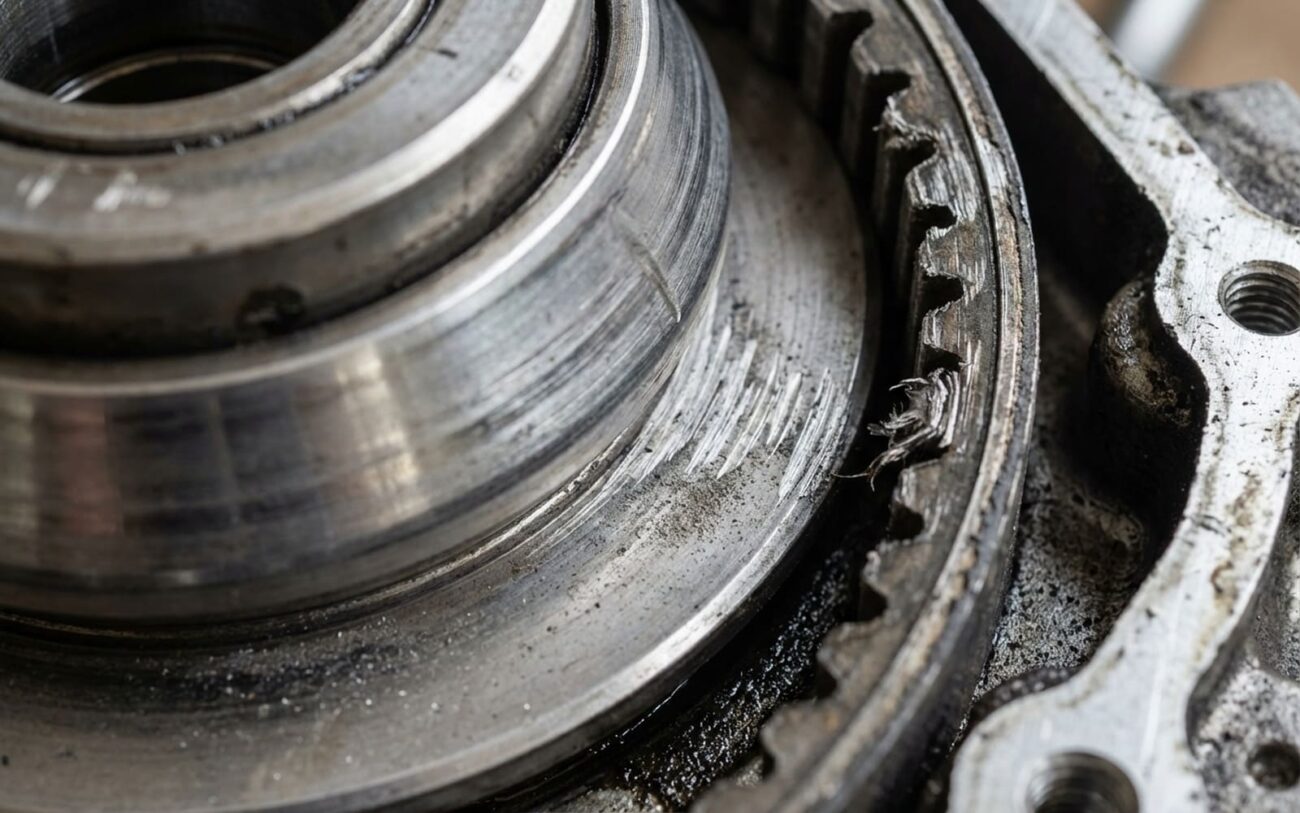
Alright, let’s talk about CVT slipping. When a customer walks into my shop and says their car’s “slipping,” especially with a continuously variable transmission, I know exactly what they’re usually describing. It’s that gut-wrenching feeling where you hit the gas, the engine revs climb like crazy – sometimes shooting way up – but the car just doesn’t go anywhere proportionally. It feels like the power’s getting lost somewhere, or there’s a big delay, particularly when you’re asking a lot from the engine: climbing a steep hill, merging onto a busy highway, or trying to pass someone at speed. That’s the classic, unmistakable sign of a CVT slipping under acceleration.
Beyond that primary symptom, you might also pick up on a distinct high-pitched whine or a growl. It’s a sound that follows the engine RPM, not your road speed, and people often describe it as a “rubber band stretching” noise. It’s definitely not like a traditional automatic transmission shifting gears. I’ve also had drivers report a shudder or vibration, especially when they’re just pulling away from a stop or shifting into Drive or Reverse, and it often gets worse once the transmission warms up. These aren’t just minor annoyances; they’re the transmission screaming for help, telling you there’s internal wear.
Here’s the absolute critical thing I’ve learned over two and a half decades wrenching on these things: once you feel that RPM flare, damage is already happening. I mean, right then and there. The metal push belt or chain isn’t gripping the pulley surfaces like it should; it’s grinding, generating extreme heat, and shaving off microscopic metal particles from those hardened components. That metallic debris then circulates throughout the fluid, acting like sandpaper, accelerating wear on everything else inside – bearings, valves, clutch packs. If you keep driving it hard, especially under load, you’re not just delaying a repair. You’re actively turning what might have been a rebuildable transmission into a full-blown replacement in a matter of days, sometimes even hours.
Beyond the Feel: Diagnosing the Real Problem
Now, just because something feels like CVT slipping doesn’t automatically mean the transmission itself is toast. I’ve seen plenty of external issues that can perfectly mimic an internal failure, and ruling those out is absolutely essential before you even think about tearing into the unit. The most common culprit, and thankfully the easiest to fix, is simply a low CVT fluid level. But it goes beyond that. A failing engine mount can create a sensation of hesitation or lurching that feels a lot like slippage. Even engine misfires, a dirty MAF sensor, or issues with the throttle actuator can fool you into thinking the transmission is at fault. It’s why you can’t just guess.
The key, in my experience, is to use targeted diagnostics. You need to confirm where the problem truly lies, not just throw parts at it. Below is how I typically break down the common symptoms, what’s likely going on inside the CVT if it’s truly internal, what other things could be faking it, and then, most importantly, the definitive tests I use to pinpoint the issue.
| Symptom | Likely Internal CVT Cause | Common External Mimics | My Definitive Diagnostic Test |
|---|---|---|---|
| RPM flare under acceleration | Worn primary or secondary pulley sheaves, a damaged push belt or chain, internal pressure loss from seal or piston wear, or failing clutch packs. | Low CVT fluid level, a clogged fluid pickup screen, failing transmission fluid pump, engine power loss (like a misfire, bad MAF sensor, or fuel delivery issue), or even TCM software glitches. |
First, check fluid level and condition. Then, I hook up a good scan tool and monitor live data. I specifically compare commanded vs. actual primary pulley pressure. If I see a consistent deviation of more than 30 psi, that’s a strong indicator of internal hydraulic or mechanical failure. I also watch how well the pulley ratio tracks the commanded ratio – any lag or inconsistency points to a problem. |
| High-pitched whine or growl | Failing input shaft bearing, worn primary or secondary pulley bearings, or damaged thrust bearings. | Failing alternator bearing, a worn serpentine belt tensioner or idler pulley, power steering pump noise, or an A/C compressor clutch bearing. |
This is where a mechanic’s stethoscope becomes invaluable. I’ll listen carefully around the transmission case. If the whine peaks there and changes directly with engine RPM (not road speed), it’s almost certainly internal. I’ll test it in Park, Neutral, and then under a light load in Drive to confirm. |
| Delayed engagement or shudder when shifting | Worn forward or reverse clutch packs, damaged clutch drums, or degraded friction material due to overheated fluid. | Low or severely degraded CVT fluid, a faulty shift solenoid, a TCM communication error, or even a failed engine mount. |
First thing I do is check the fluid level and condition at operating temperature. I’m looking for a metallic sheen, any visible particles, or that unmistakable burnt smell. Then, I’ll run line pressure tests using the scan tool. Low or fluctuating pressures during engagement point to internal hydraulic issues or worn clutch packs. |
What’s Actually Breaking Inside: Common Root Causes
Once I’ve definitively ruled out all the external factors, the problem is almost certainly inside the sealed transmission case. These aren’t random failures; they follow predictable wear patterns driven by heat, pressure, and good old material fatigue. Understanding these helps you make sense of the repair.
Pulley Sheave Wear
The primary and secondary pulleys are the heart of a CVT, clamping that drive belt or chain with hundreds of pounds of hydraulic pressure. Over time, especially if the fluid has degraded or overheated, those hardened steel surfaces can develop grooves, flat spots, or scoring. Once that smooth conical surface is compromised, the belt just can’t grip properly. That’s when you get slippage and a massive buildup of heat. This is a mechanical failure, plain and simple, and no software update is going to fix it.
Drive Belt or Chain Failure
Most modern CVTs use either a push belt (made of stacked metal bands and links) or a chain (articulated links with tension plates). Both are under constant, immense stress. I’ve seen individual links crack, metal bands fatigue, and tension members stretch. There are known durability issues in certain Jatco and ZF units, particularly when they’re paired with high-torque engines or subjected to frequent towing. For example, I’ve dealt with premature chain wear causing shuddering in numerous Nissan models – very similar to the issues addressed in service bulletins for certain 2013-2014 Altimas. This isn’t just normal wear; sometimes, it’s a design or material challenge in specific engine-transmission pairings.
Bearing Failure
The input and intermediate shafts inside the CVT rely on precision bearings to keep everything aligned and spinning smoothly. When these bearings wear out, they allow axial or radial play, which inevitably misaligns the pulleys. And when the pulleys are out of alignment, it accelerates wear on both the belt and the sheave surfaces. A failing bearing almost always starts with a distinct noise (that whine we talked about), and if ignored, it progresses quickly to slippage as components lose their precise positioning.
Internal Hydraulic Leaks
The clamping force on those pulleys, which is critical to preventing slip, is maintained by hydraulic pressure. While external seals can fail (and they do), the more serious internal issue is bore wear within the pulley pistons or the valve body passages. If the aluminum housing wears or scores, that hydraulic pressure bleeds off, reducing the clamping force. When that happens, the belt slips. This isn’t something a fluid change will fix; it’s metal-on-metal wear inside the transmission case that requires opening it up.
Just to be clear, things like external fluid leaks (say, from cooler lines) or sensor failures (speed sensors, pressure sensors) are not what I consider “internal CVT failures.” Those are typically maintenance or electrical issues that can often be addressed without a full transmission overhaul. True internal failure means the mechanical or hydraulic components inside the transmission case are damaged beyond their normal service limits.
The Fix: Rebuild or Replace?
If my diagnostics confirm internal damage – and we’re talking about actual mechanical or hydraulic failure inside the case – then we’re not looking at a quick fix. This is a big decision: repair or replace. But first, you need a proper, hands-on assessment. This isn’t a DIY diagnosis you can do in your driveway. It requires dropping the pan, removing the valve body, and getting a good look at what’s actually going on inside.
My process always starts with draining the fluid. I inspect it carefully for metal content. A silvery sheen, visible metallic particles, or a burnt smell means there’s significant internal wear. Then, I’ll remove the valve body to get better access to the clutch packs and pulley assemblies. I use a borescope to meticulously examine the pulley sheaves for scoring, grooves, or unusual wear patterns. I also check the pulley shafts for endplay with a dial indicator – anything more than 0.002 inches usually points to a bearing failure. This detailed inspection is crucial; it tells me the true extent of the damage, which then informs the repair strategy.
This is Professional Territory.
Let’s be clear: this isn’t a DIY job. Most CVT manufacturers don’t even sell individual belts or pulleys through dealerships; the unit is typically designed as a sealed system, meaning you’re dealing with either a specialized rebuilder or a complete replacement.
Your Repair Options:
Complete Rebuild by a Specialist Professional Only
Replacement with a Remanufactured Unit Professional Only
When it comes to reassembly, precision isn’t just important; it’s everything. Torque specs are critically important – valve body bolts often require a specific sequence and a low torque, like 89 inch-pounds in a star pattern. Pan bolts might be 44 inch-pounds, and axle nuts around 173 foot-pounds. And here’s a non-negotiable: only use the OEM-specified CVT fluid. I’m talking Nissan NS-3, Honda HCF-2, Subaru CVT Fluid, whatever your manufacturer specifies. These fluids have exact friction modifiers and thermal stability properties that generic “meets specs” fluids simply can’t replicate. The wrong fluid, even if it claims compatibility, can cause immediate slippage, overheating, and lead to premature failure. I’ve seen it happen too many times.
Proving the Fix: Post-Repair Validation
After a rebuild or a complete replacement, I never just hand over the keys. The transmission needs to prove it’s fixed under real-world conditions. My process starts with a thorough road test: I’ll accelerate hard from 30 to 60 mph, checking for any hint of RPM flare, hesitation, or shudder. The transition through the full ratio range should feel utterly smooth and linear, just like it came from the factory.
My Validation Checklist
-
I’ll monitor live data with my scan tool: Commanded vs. actual primary pulley pressure should match within 15 psi across all operating conditions, from light throttle to wide open.
-
The actual pulley ratio needs to track the commanded ratio precisely, without any lag or fluctuation.
-
Absolutely no diagnostic trouble codes (like P0841 or P0846, which are common for pressure issues) should return.
Then, after about 500 miles of normal driving, I always bring the vehicle back in for a follow-up. I’ll check the fluid level and condition again – it should still be clean, at the correct level, and completely free of any new metallic debris. I also use an infrared thermometer to verify the operating temperature; most CVTs should consistently stay below 220°F under normal use. Consistently higher temps suggest there might still be ongoing issues with cooling or internal drag.
Some shops, and I often do this myself, will also perform a CVT relearn procedure after a major repair or replacement. This allows the Transmission Control Module (TCM) to recalibrate its shift points and pressure control. It’s not always strictly required by every manufacturer, but it can significantly improve drivability and help prevent early fault codes from cropping up.
The Hard Truth: Cost & When to Walk Away
Let’s be brutally honest here: CVT repairs are expensive. There’s no getting around it. The financial decision isn’t always clear-cut, and it’s something I discuss frankly with my customers. You really need to weigh the repair cost against the vehicle’s current value and its expected lifespan.
| Repair Type | DIY Cost (Parts) | Shop Cost (Total) | My Success Rate (if slipping) | Secondary Risk |
|---|---|---|---|---|
| CVT Fluid & Filter Change | $150–$300 | $250–$400 | <10% | Almost always just delays the inevitable; high risk of further, more severe damage. |
| Valve Body Replacement | $500–$1,200 | $1,200–$2,200 | 60–80% | High risk if the pulleys or belt are already worn; any existing debris can quickly damage the new valve body. |
| Complete Overhaul / Replacement | $2,000–$4,000 | $3,500–$8,000 | >95% | Dealing with warranty claims can be a headache; always a potential for other related drivetrain issues to surface later. |
Let me be direct: a simple fluid change has almost no chance of fixing actual internal slip. By the time you feel that slip, the damage is almost certainly mechanical and beyond what fresh fluid can remedy. A valve body swap can work, but only if the problem is purely electronic or hydraulic and the rest of the transmission is perfectly clean. I see this misdiagnosed a lot, and if there’s any metal in the fluid, replacing just the valve body is, frankly, throwing good money after bad.
Here’s my personal rule of thumb, based on years of seeing people sink money into dying cars: if the repair cost for the CVT exceeds half the private-party value of the car (check Kelley Blue Book), and the vehicle has over 100,000 miles, you need to seriously consider replacing the vehicle entirely. A failing CVT is often the first major sign of broader drivetrain wear, and things like the alternator, engine mounts, or suspension components may not be far behind. Sometimes, it’s just time to cut your losses.
Keeping It Alive: Prevention & Monitoring
The best way to avoid a costly CVT repair? Prevent it from ever happening in the first place. And prevention, when it comes to CVTs, boils down to two critical things: fluid and heat. First off, ignore that “lifetime fluid” claim you might see in your owner’s manual. For CVTs, that’s often based on ideal, laboratory conditions, not the real-world driving most of us do every day.
My Maintenance Strategy for CVTs:
-
I recommend changing your CVT fluid and filter (if applicable) every 30,000 to 60,000 miles. This is especially true if you tow, drive regularly in hilly terrain, or spend a lot of time in stop-and-go traffic. Those conditions are brutal on CVT fluid.
-
Use ONLY the OEM-specified fluid. I cannot stress this enough. Whether it’s Honda HCF-2, Nissan NS-3, or Subaru CVT Fluid, use exactly what the manufacturer calls for. Substitutes, even those claiming to “meet specs,” often have slightly different friction modifiers that can lead to slippage and shudder, sometimes very quickly.
-
Pay attention to your driving habits and any subtle changes. Catch those brief RPM flares early, maybe during moderate acceleration when getting on the highway. If you catch it immediately, a fluid change might help restore proper friction and cooling. But don’t wait.
-
If your car has a dipstick, check the CVT fluid at every oil change. If it’s dark brown, smells burnt, or has a metallic sheen, that’s your cue to take immediate action. Many newer vehicles don’t have dipsticks, which makes monitoring harder, so you’ll have to rely heavily on those regular maintenance intervals and how the car feels.
