You shut off your Volvo or Lexus, step out into the dark, and the headlights stay on. Your gut says: “Battery’s gonna be dead by morning.” But before you start pulling fuses or cursing the dealer, stop. I’ve seen this a thousand times in my shop—more often than not, it’s not a failure. It’s working exactly as designed.
It’s Probably Not Broken
If the lights stay on after you open the driver’s door and go off after 30–60 seconds, that’s Follow-Me-Home or Welcome Lighting—a factory feature. It’s not a glitch. It’s not a relay stuck. It’s intentional.
But—and this is important—if the lights stay on without opening the door, or they never shut off, that’s a real problem. That’s when you’ve got a fault in the lighting control module (LCM), ambient light sensor, or a bad input signal.
The timing function isn’t handled by the BCM or headlight switch. It’s managed by the lighting control module or the front body ECU. If the lights come on predictably and shut off on schedule, the system’s likely fine. You just didn’t know it was enabled.
Diagnose Before You Replace
First thing I do? I check the settings. Every time. It takes two minutes. On a Lexus, it’s under “Settings > Lighting > Headlight Off Timer.” On a Volvo, it’s in the center display under “Lights” or via the stalk. Disable it. Close the door. Shut off the car. If the lights go off immediately—case closed. You were just using a feature you didn’t know about.
If the delay is fixed—say, always 30 seconds, no matter what—and you can’t adjust it, that’s a red flag. That’s not a setting issue. That’s the LCM ignoring commands. Now we’re in failure territory.
Next step: scan tool. Not a $30 OBD2 reader. I’m talking Techstream for Lexus, VIDA for Volvo. You need bidirectional control. You need to see live data from the ambient light sensor—measured in lux.
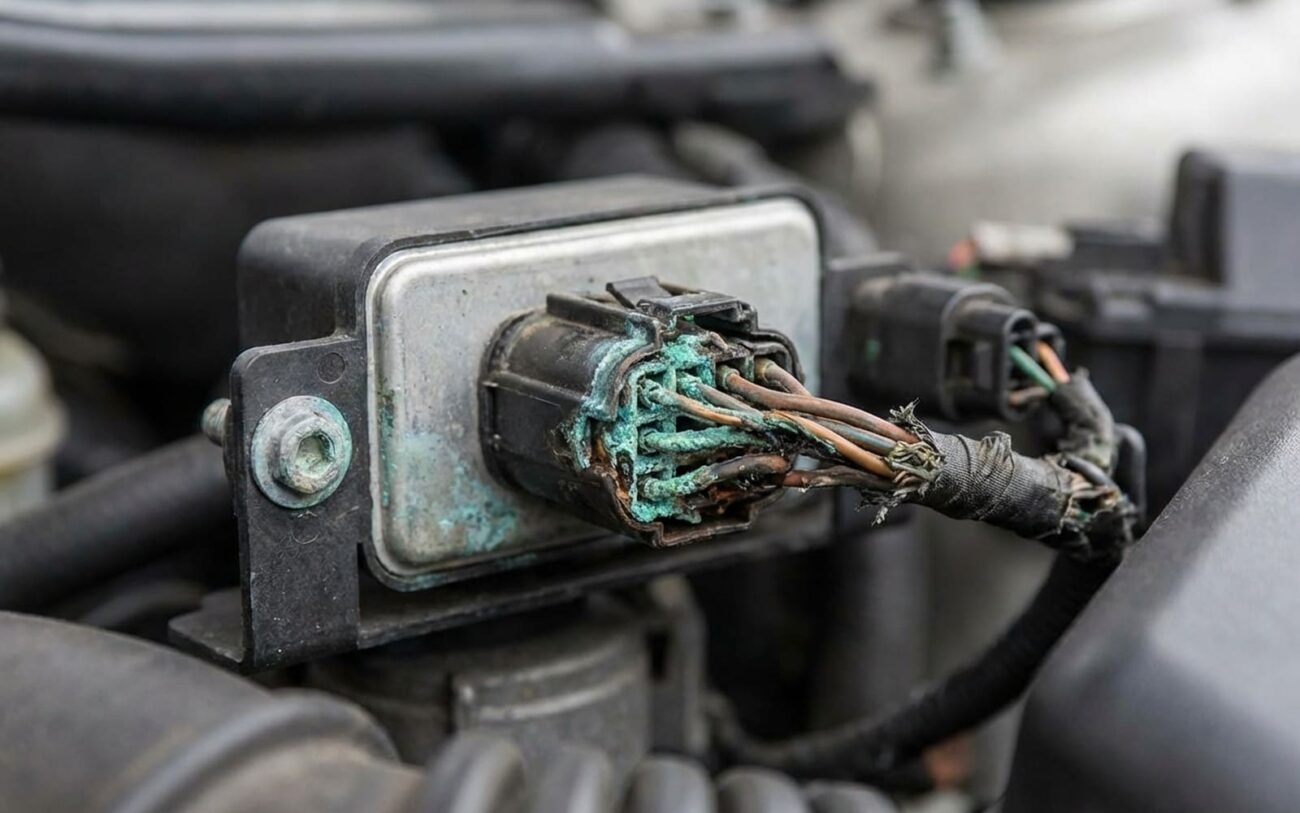
Find the sensor. It’s usually behind the windshield, near the rain sensor or rearview mirror mount. Cover it with your hand. The lux value should drop to near zero. Uncover it—should jump back up. No change? Either the sensor’s dead, or there’s a wiring issue. Could be a short, could be corrosion in the connector (common in older Volvos with cracked windshields).
Then, command the headlights on and off through the scan tool. If they respond, the output side of the LCM is functional. That means the problem is upstream—sensor input, logic, or software.
Real Failures: What’s Actually Going Wrong
When the module ignores commands, doesn’t respond to sensor input, or the timer runs regardless of settings—it’s usually one of three things:
- Software corruption in the LCM (most common)
- Failed ambient light sensor stuck in “dark” mode
- Hardware failure in the LCM—capacitors, ICs, moisture damage
Software glitches happen. Voltage spikes during jump-starts, interrupted programming, or just age can corrupt the non-volatile memory in the LCM. The module boots, but the timer logic is frozen or looping.
Hardware failures? Less common, but they happen. I’ve pulled apart LCMs from 2014–2017 S60s with swollen capacitors—classic sign of heat stress. Moisture intrusion around the front ECU (especially near the battery tray) can cause slow corrosion. Not enough to kill the whole unit, but enough to mess with the lighting outputs.
And don’t forget the inputs. A faulty door switch or ignition switch that doesn’t signal “key off” properly can trick the LCM into thinking the car’s still running. I’ve seen techs replace $800 modules when a $18 door jamb switch was the real issue. Always verify trigger signals before you condemn a control unit.
How I Fix It
Turn it off in the menu.
DIY-FEASIBLE
Reprogram the LCM.
Professional Only
Replace the LCM.
Professional Only → Replace/Reprogram
Test It Right
After any repair, validate it. Don’t just walk away.
Set the delay to 30 seconds. Shut off the car. Open the door. Time it. Lights should go off within 3–5 seconds of the set duration. Then, test auto mode: cover the ambient sensor—lights should turn on. Uncover it—they should turn off.
If you reprogrammed or replaced the module, scan for DTCs. Clear them. Drive the car through a full cycle. Rescan. Look for U-codes (network issues) or B-codes in the body control system.
And don’t forget the fancy stuff: adaptive cornering, automatic high beams, matrix LED functions. If those don’t work, the module wasn’t programmed fully. I’ve had to reflash twice because the auto high beam logic didn’t activate. Took an extra 20 minutes to sort.
Costs & Consequences
| Repair Type | DIY Cost | Shop Cost | Success Rate | Secondary Risk |
|---|---|---|---|---|
| Settings Adjustment | $0 | $0 | 100% |
None |
| Software Update | N/A | $150–$300 | >95% |
Interrupted flash can brick the module |
| Module Replacement | $300–$800 | $500–$1200+ | >98% |
Improper programming → CAN bus errors |
Here’s what most people miss: the real cost isn’t the repair. It’s the battery. AGM batteries in these cars cost $250–$400. One deep discharge cuts their life in half. Two or three? Done. So fixing the headlight delay isn’t about convenience. It’s about protecting a $350 battery.
Check your battery warranty before authorizing repairs. Some manufacturers won’t cover AGM replacements if parasitic draw caused the failure.
Prevention
Maintain the electrical system. Weak battery? Get it load-tested. Alternator putting out 13.2V? That’s not enough. Should be 13.8–14.4V. Voltage swings corrupt module memory over time.
If the headlight delay starts acting weird—timing changes, lights come on in daylight—don’t ignore it. Could be the ambient sensor failing or the LCM starting to go. A software refresh now might save you a module later.
And after a jump-start or battery replacement, drive the car for at least 20 minutes. Let the modules relearn. Some need a full drive cycle to reset adaptive functions.
One last thing: if you’re seeing multiple lighting or body control issues, do a parasitic draw test. Could be a module not going to sleep. I’ve found draws as high as 800mA from a stuck LCM. That’s a dead battery in two days.
