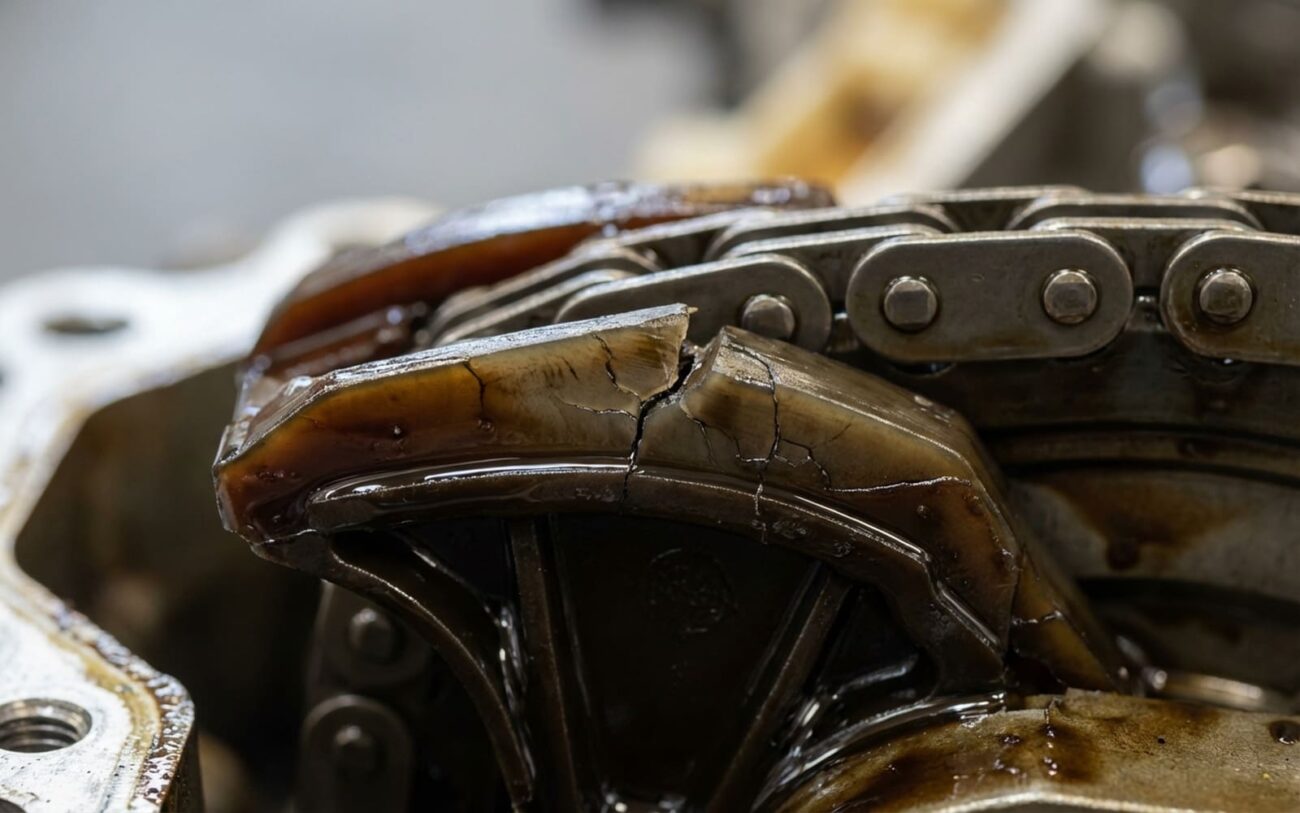
Look, if you’re driving an N47 BMW diesel, you probably already know about the two big headaches: the timing chain and the turbo. These engines don’t just quietly give up the ghost; they give you plenty of warning. And trust me, after 25+ years spinning wrenches, I’ve seen firsthand how ignoring those early signs turns a $3,000 fix into a $7,000 engine replacement. It’s not a matter of if these parts can fail, but when and how you react. Let’s talk about what to listen for, what to look at, and how to actually fix it right.
The Warning Signs: What Your N47 is Telling You
First things first, let’s talk about what you’ll actually hear and see when these common N47 issues start brewing. Catching these early is absolutely critical. I’ve had too many customers roll in with a seized engine because they “didn’t think that little rattle was a big deal” or “just kept topping up the oil.” Don’t be that guy. An early diagnosis can save you thousands.
Timing Chain Troubles
The timing chain system is usually the first major concern. If you’re hearing a brief, metallic rattle — think marbles in a tin can — right after a cold start, that’s your primary red flag. It typically lasts a few seconds and then quiets down. This noise comes from the hydraulic chain tensioner not building oil pressure fast enough, or the plastic chain guides (which are notorious for wear) allowing too much slack. If that rattle starts lasting longer, happens even when the engine is warm, or just gets louder over time, you’ve got a problem that’s getting worse, fast.
Turbocharger Failure Indicators
The turbocharger tells a completely different story, but it’s just as critical. If you’re consistently seeing blue-gray smoke from the exhaust, especially when you accelerate, and you’re having to add oil every few hundred miles, that turbo’s internal oil seals are likely shot. Oil is getting past them, into the intake, and burning in the combustion chamber. Another dead giveaway is a high-pitched whine or a siren-like sound that changes with engine RPM (not belt speed). That’s usually worn bearings letting the turbine or compressor wheel scrape against the housing. And if your car suddenly feels like it’s lost all its guts—no boost, terrible throttle response—the turbo might have seized up completely. I’ve pulled turbos that looked fine from the outside, but the shaft inside was frozen solid. Let this go, and you risk metal fragments breaking off and getting sucked into the engine, which will score your pistons and cylinders. That’s not just a turbo replacement anymore; it’s an engine rebuild.
Don’t Guess: How I Pinpoint the Problem
Here’s where a lot of people, even some mechanics, go wrong. Those symptoms I just talked about? They can be tricky. Other components can mimic timing chain or turbo issues, and just throwing parts at it based on a guess is a quick way to waste a lot of money without actually fixing anything. The trick is targeted testing. You need to confirm the source, not just assume.
I’ve put together a quick reference for the common symptoms, what they usually point to, and what else could be making that noise or causing that smoke. More importantly, I’ve included the definitive tests I use in my shop to confirm what’s really going on.
| Symptom | Likely in Timing System | Common External Mimics | Definitive Test to Confirm Source |
|---|---|---|---|
| Metallic rattling at cold start | Worn chain tensioner or degraded plastic guides | Failing vacuum pump (located on rear of cylinder head) |
Use a mechanic’s stethoscope. Noise from the front timing cover points to the chain. Noise near the brake booster or rear of head suggests the vacuum pump. |
| P0016/P0017 codes (cam/crank correlation) | Timing chain elongation or jump | Faulty camshaft position sensor or damaged wiring |
Use a professional scan tool to monitor camshaft adaptation angle at idle. Values beyond ±5.0° indicate mechanical stretch. |
| Persistent rattling at idle | Failed chain guide rails or partial timing jump | Worn dual-mass flywheel (DMF) or failing accessory pulley |
Compare noise with stethoscope: on timing cover vs. transmission bellhousing. If noise changes with clutch engagement, suspect the DMF. |
| Symptom | Likely in Turbocharger Core | Common External Mimics | Definitive Test to Confirm Source |
|---|---|---|---|
| Excessive oil smoke under load | Failed turbo oil seals | Worn valve stem seals or piston rings |
Perform a cylinder leak-down test. Oil pooled in the compressor housing after removing the intake pipe confirms turbo seal failure. |
| Whining or siren noise tied to RPM | Worn turbo bearings or damaged wheels | Failing alternator bearing, idler pulley, or intake air leak |
Use a stethoscope on the turbo housing. Noise that scales directly with spool speed confirms turbo. |
| Lack of boost, no power | Seized or stuck turbocharger shaft | Major boost leak, clogged diesel particulate filter (DPF), or stuck wastegate |
Install a boost gauge at the intake manifold. If target boost (~22–26 psi absolute) isn’t reached, the turbo core is likely seized. |
But here’s the real bottom line: no electronic test or educated guess beats getting your hands dirty. For the timing chain, you’ve got to get that upper timing cover off. Visually inspect those guides and the tensioner. If they’re cracked, worn, or broken, you’ve found your problem. And if you’ve got the right BMW factory tools (like the ones for measuring chain stretch), use them. For the turbo, you need to pull it out. Check for any shaft play – up and down, side to side – and look for contact marks on the compressor or turbine wheels. If you try to spin the wheel by hand and it drags or feels rough, that turbo is toast.
Why These Parts Keep Breaking: The Root Causes
These aren’t just random failures; they’re systemic issues with the N47 design. BMW made some choices that, in hindsight, weren’t ideal, leading to predictable problems.
Timing Chain Design Flaws
The timing chain issues mostly come down to material choices and how the system is lubricated. Those early plastic chain guides were simply not robust enough. They’d crack and wear out, especially with continuous engine vibration. Once they start to go, the chain gets slack and begins slapping around inside the timing case. The hydraulic tensioner, which relies on oil pressure to keep things tight, also has its weaknesses. If its internal check valve leaks down overnight, the chain starts up loose every single cold start until oil pressure builds. I’ve also seen restricted oil passages that starve the upper guide area of lubrication, speeding up wear. This isn’t about an external oil leak; it’s about oil flow and the integrity of components inside that timing case.
Turbocharger’s Achilles’ Heel: Oil
Almost every turbo failure I’ve seen on an N47 boils down to oil. Specifically, oil coking. When you shut down a hot engine, especially after a hard drive, residual heat bakes the oil sitting in the turbo’s bearing housing. Over time, this forms hard carbon deposits, like varnish. These deposits restrict oil flow, which quickly leads to bearing wear, shaft play, and eventually, seal failure. The N47’s variable geometry turbo runs incredibly hot, and the original turbine shaft material wasn’t always up to the task. BMW actually acknowledged this with a service bulletin for premature turbo failure in some 2009–2011 models, citing oil supply and bearing housing problems. But remember, a bad boost sensor, a cracked intercooler, or a clogged DPF can all feel like a bad turbo. Always confirm your diagnosis before you condemn the core.
My Approach to the Fix: Repair Paths and Critical Steps
Once you’ve confirmed exactly what’s failing, the repair path becomes clear. But it’s not always straightforward, and there are critical steps you absolutely cannot skip.
Timing Chain Replacement
If you’ve caught the timing chain issue early—meaning the engine hasn’t actually jumped time and you don’t have bent valves—you can replace the full kit (chain, guides, tensioner, sprockets) with the engine still in the car. But I’ll tell you right now, this is not a job for a beginner. You’re going to need specialized BMW timing tools (like 11 3 150 and 11 3 180) to lock the camshafts and crankshaft precisely. Get these wrong, and you’re asking for trouble.
Pay close attention to torque specs. The cam sprocket bolts are torque-to-yield, meaning they stretch when tightened and must be replaced. Typically, that’s 100 Nm plus an additional 90-degree turn. The crankshaft bolt is even more critical: 300 Nm plus a full 360-degree turn. Yes, a full turn after that initial torque. If you mess this up, the chain can jump as soon as you start the engine, and then you’re back to square one, but with internal damage. If the timing has already slipped and the engine was run under load, you’re almost certainly looking at bent valves, cracked pistons, or damaged cylinder walls. In that scenario, your only real option is a used or remanufactured long block engine.
Turbocharger Replacement
For the turbo, replacement is really the only viable solution. Trying to rebuild one in a typical shop environment is just too risky and rarely cost-effective. Always go with a new OEM unit or a high-quality remanufactured one that comes with a solid warranty. This is non-negotiable: always replace the oil feed and return line seals. And inspect or, better yet, replace the oil feed line itself. Clogged or degraded feed lines are a super common cause of repeat turbo failures, because the new turbo gets starved of oil right away. Torque specs here are important too: the turbo-to-manifold nuts usually go to 30 Nm, and that oil feed banjo bolt is typically 25 Nm.
Confirming the Job’s Done Right
Swapping parts is only half the battle. A successful repair isn’t just about bolting new stuff on; it’s about verifying that the problem is actually solved and that you haven’t created new ones. This is where a lot of DIYers and even some shops fall short, leading to expensive comebacks.
After a timing chain job, obviously, that cold-start rattle should be completely gone. But don’t just trust your ears. Get a good scan tool and check the camshaft adaptation values at idle. If they’re within ±3.0 degrees, you can be confident the timing is spot on. Anything outside that, and you’ve still got an issue.
For the turbo, the blue-gray oil smoke should be gone, plain and simple. And when you drive it, boost pressure needs to build quickly and smoothly, matching what the engine’s requesting. Monitor live data during a road test: the actual boost pressure should track very closely with the requested boost. A quick stethoscope check on the turbo housing should only reveal smooth airflow, not any grinding, scraping, or whistling. These checks are your insurance policy that the repair was done correctly.
The Hard Numbers: Costs and When to Walk Away
Alright, let’s talk about the elephant in the room: money. These aren’t cheap fixes, and the financial reality can hit hard. Here’s a general idea of what you’re looking at:
| Repair Type | DIY Cost (Parts) | Shop Cost (Parts & Labor) | Success Rate | Secondary Risk if Failed |
|---|---|---|---|---|
| Timing Chain Kit Replacement | $500 – $800 | $2,500 – $4,000 | 95%+ | Incorrect installation can cause immediate timing jump, leading to catastrophic internal engine damage. |
| Turbocharger Replacement | $1,500 – $2,500 (OEM new) | $3,500 – $5,000 | 98%+ | Failure to clean oil lines or prime the turbo can destroy the new unit within hours. |
Before you authorize any major repair like these, you’ve got to be honest with yourself about the car’s value. Check sites like KBB or NADA for the current private-party value of your 320d or 330d. If the repair cost is going to be more than 50-60% of what the car is actually worth, you’re in a tough spot. I’ve seen too many owners pour $4,000 into a 12-year-old diesel, only to be back in my shop a few months later with a high-pressure fuel pump failure or a clogged DPF. Sometimes, the smartest move isn’t to fix it, but to cut your losses and move on. That’s not a failure; it’s just smart, prudent ownership.
Keeping Your N47 Healthy: Prevention and Vigilance
You can’t magically erase the N47’s design flaws, but you can absolutely manage them and extend the life of your engine. It all comes down to vigilance and proper maintenance.
Timing Chain Prevention
For the timing chain, oil quality and strict change intervals are non-negotiable. You must use only BMW LL-04 approved full-synthetic oil. Don’t skimp here. And keep listening for that cold-start rattle; it’s your earliest, most critical warning. On some of those earlier N47 engines, I’ve even recommended customers consider a preemptive chain kit replacement between 120,000 and 160,000 km. Yeah, it’s a big chunk of change, but it’s a lot cheaper than waiting for it to fail catastrophically and needing a whole new engine.
My Oil Change Rule
Forget what the maintenance monitor says. I tell all my N47 customers to change their oil every 10,000 km (6,000 miles), no exceptions. Fresh oil is absolutely vital for the hydraulic tensioner to work correctly and to keep those chain guides lubricated. It’s cheap insurance.
Turbo Longevity Tips
For the turbo, the biggest thing you can do is change your habits. Never, ever shut the engine off immediately after hard driving. Let it idle for at least 30–60 seconds. This allows the turbo to spool down and, more importantly, lets oil continue to circulate and cool those bearings, preventing that nasty oil coking I talked about. This simple habit prevents most coking-related failures.
Also, make it a routine to periodically check the turbo intake pipe. If you see excessive oil residue in there, that’s an early red flag that the turbo seals are starting to weep. And keep a close eye on your oil consumption. If you’re adding more than a liter every 5,000 km (about 3,000 miles), something is definitely wrong, and it’s often the turbo or worn piston rings. Catch these signs early, and you can plan the repair on your terms, not when you’re stranded on the side of the road.
